01
Falcon
Up to 1.5 MW
Compact platform concept for lower-output propulsion and distributed power applications.
PROJECTS
Explore selected production facilities, infrastructure developments, demonstration projects and technology examples showing how renewable E-Fuels are moving towards practical use across transport, industry and energy systems.
Projects differ in fuel pathway, scale, maturity and application. Each example is presented using publicly available information for educational and comparative purposes.
PRODUCTION FACILITIES
Projects producing renewable hydrogen, e-methanol, e-methane, e-ammonia and synthetic hydrocarbons using renewable electricity and eligible feedstocks.
INFRASTRUCTURE & DISTRIBUTION
Storage, transport, terminals, bunkering, refuelling and supply-chain projects connecting production facilities with end users.
DEMONSTRATION & VALIDATION
Pilot plants, fuel testing, certification programmes and application trials assessing technical performance, safety and lifecycle requirements.
END-USE TECHNOLOGY
Engines, equipment and industrial systems being developed or adapted for compatible renewable fuels and feedstocks.
TECHNOLOGY & APPLICATION EXAMPLE
Technomot is developing a three-platform engine family for marine, rail, industrial and power-generation applications where reliable, high-output power remains essential.The Falcon, Dragon and Titan concepts illustrate how engine scale, fuel management, combustion strategy and control systems may be developed together for different operating requirements.

Renewable fuel deployment depends on more than fuel production. Engine architecture, fuel delivery, combustion strategy, materials, control systems, storage, safety and technical validation must be considered together before real-world use.
Company and product references are included for educational and comparative purposes and do not constitute endorsement.
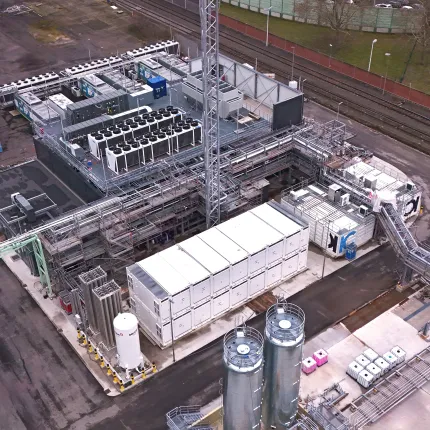
01 — SELECTED PROJECT . DENMARK · OPERATING
E-Methanol
Located in Aabenraa, the Kassø facility converts renewable electricity, water and biogenic carbon dioxide into e-methanol for shipping and industrial applications.
Developed by European Energy and operated in collaboration with Mitsui & Co., the facility represents one of the first examples of commercial-scale e-methanol production.
ANNUAL PRODUCTION CAPACITY
42,000 tonnes
02 — SELECTED PROJECT
CHILE · OPERATING DEMONSTRATION
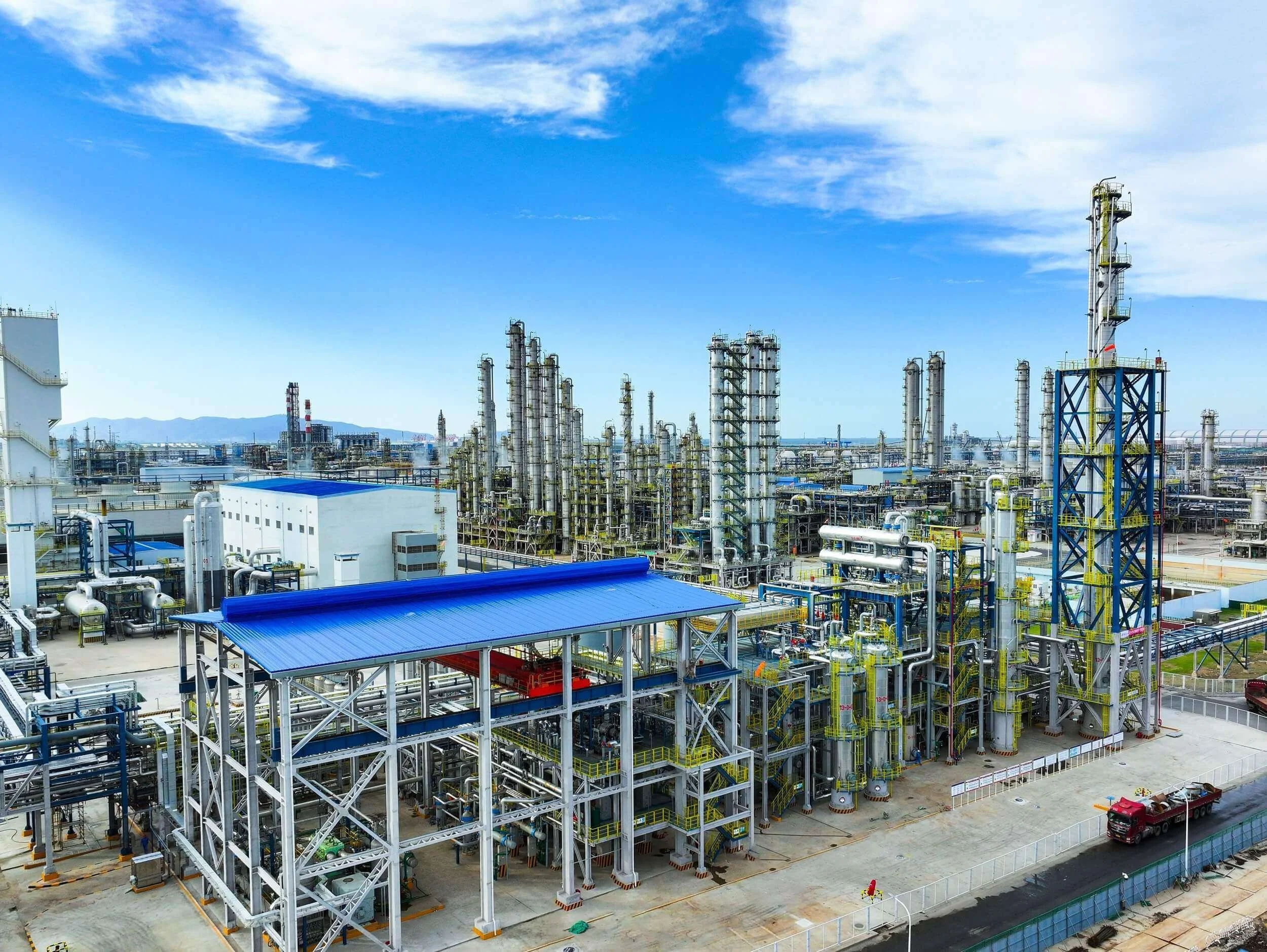
E-Methanol & E-Gasoline
Located in the Magallanes region of Chile, HIF Haru Oni uses wind-generated renewable electricity to produce hydrogen through electrolysis.
The hydrogen is combined with biogenic carbon dioxide to create e-methanol, which can then be processed into synthetic fuels including e-gasoline.
PROJECT ROLE
Integrated E-Fuel production demonstration

03 — SELECTED PROJECT . GERMANY · OPERATING
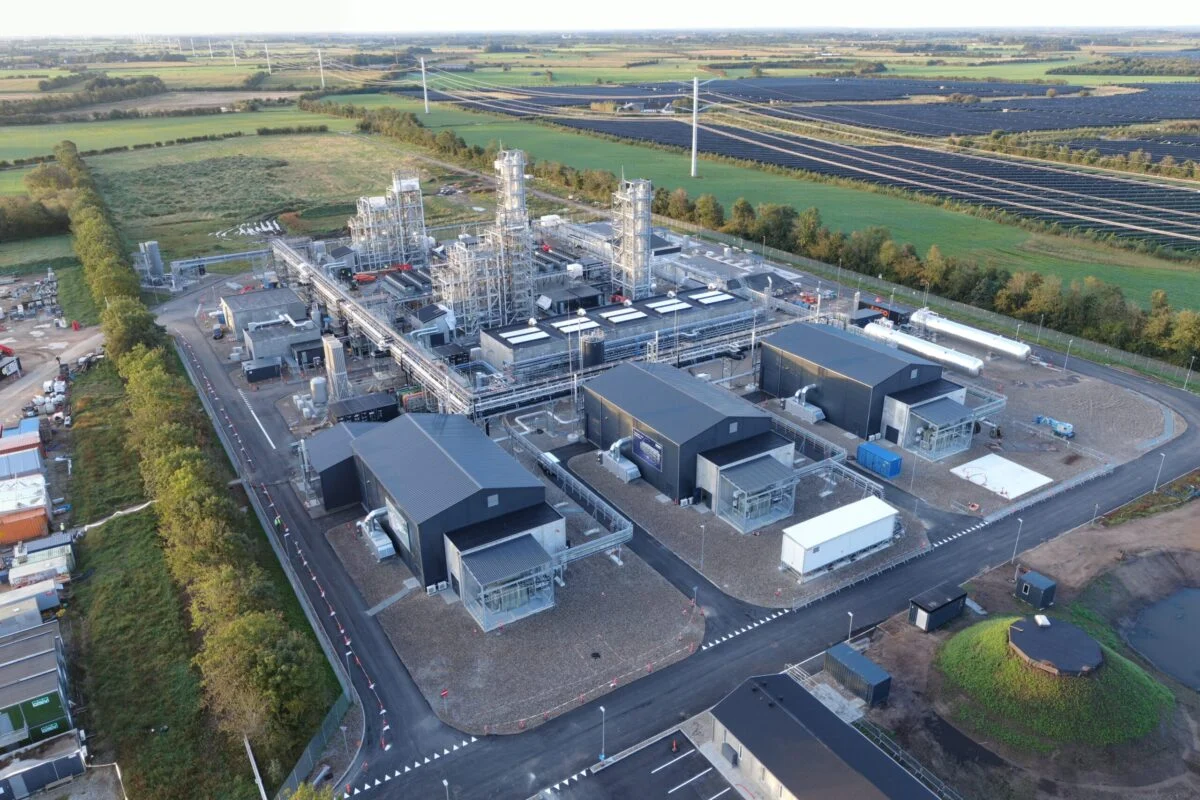
Power-to-Liquid
Located at Industriepark Frankfurt-Höchst, ERA ONE combines renewable hydrogen with biogenic carbon dioxide to produce synthetic liquid fuels and chemicals using Power-to-Liquid technology.
Developed and operated by INERATEC, the facility demonstrates how modular production technology can support the transition from pilot-scale development towards commercial E-Fuel supply.
ANNUAL PRODUCTION CAPACITY
Up to 2,500 tonnes
PROJECT EVALUATION
E-Fuel projects differ in technology, scale and development stage. A consistent evaluation framework helps distinguish early concepts from projects capable of delivering verifiable renewable fuels.
RENEWABLE ENERGY SOURCING
Electricity and hydrogen inputs should be connected to eligible renewable sources and supported by transparent documentation.
FEEDSTOCK INTEGRITY
Carbon dioxide, carbon monoxide or nitrogen sources should be clearly identified, traceable and assessed across the complete lifecycle.
LIFECYCLE PERFORMANCE
Expected emissions reductions should be calculated using recognised methodologies and independently verified where appropriate.
TECHNOLOGY READINESS
Core technologies, system integration, operational experience and technical risks should be considered for each production pathway.
DELIVERY & SCALE
Permitting, financing, construction progress and supply-chain capability help indicate whether announced production capacity can be delivered.
OFFTAKE & INFRASTRUCTURE
Storage, transport, certification, distribution infrastructure and customer agreements are essential for practical market deployment.
PROJECT SUBMISSIONS
We welcome information from project developers, technology providers and industry partners working across renewable E-Fuel production, infrastructure and deployment.
Share your project with the E-Fuel Association for consideration within our project landscape.
Submit a Project
Project information is based on publicly available sources and information supplied by project organisations. Inclusion does not constitute endorsement, certification or independent verification by the E-Fuel Association. Project status, capacity and timelines may change.
News & Insights
POLICY · PROJECTS · MARKETS · TECHNOLOGY
Explore selected analysis and updates covering policy, production projects, investment, technology, standards and real-world adoption across the E-Fuel value chain.