Policy & Regulation
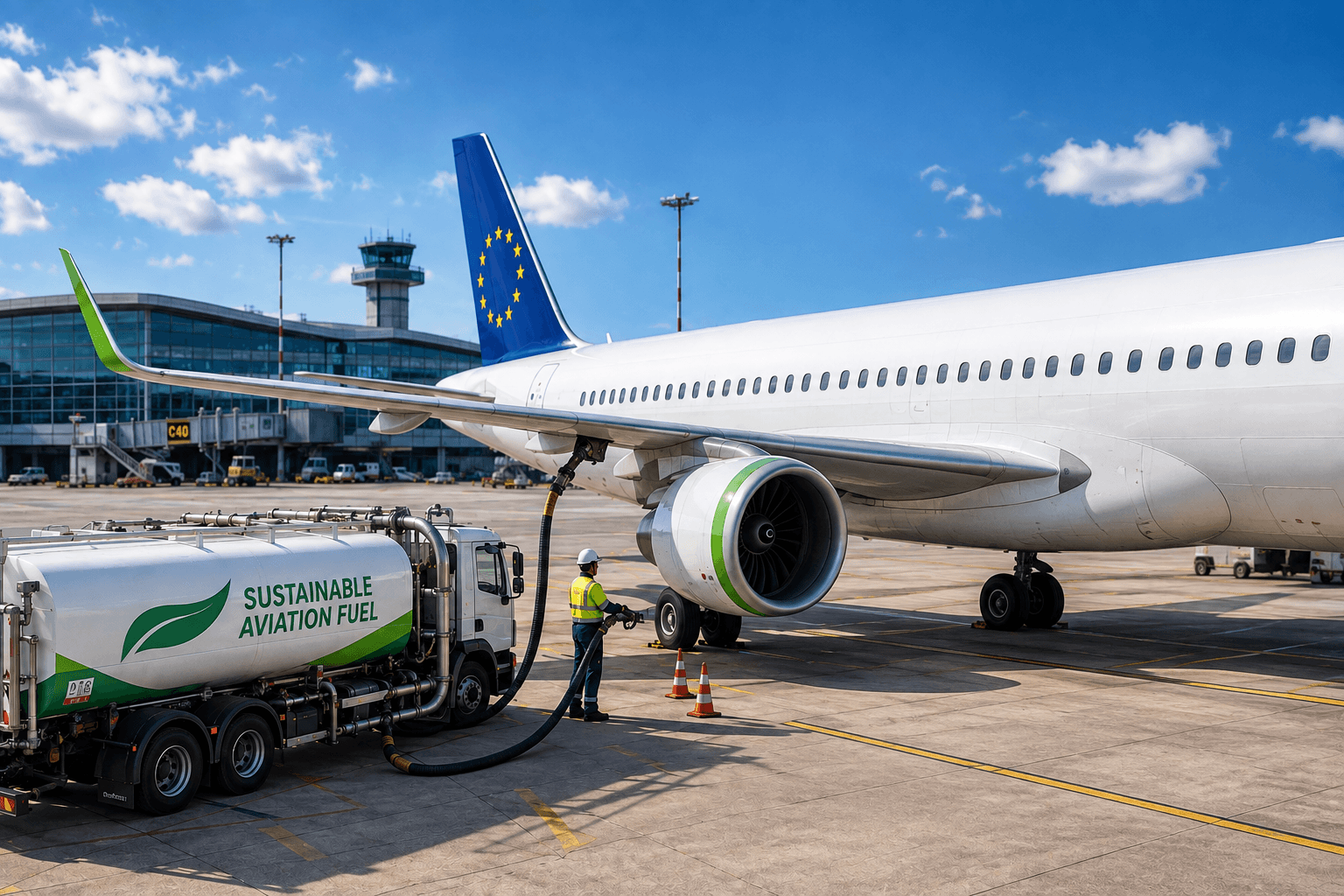
EU Adopts ReFuelEU Aviation Rules with Dedicated Synthetic Fuel Targets
The European Union adopted ReFuelEU Aviation in October 2023, introducing mandatory sustainable aviation fuel targets and a dedicated synthetic-fuel requirement beginning in 2030.
New European rules create mandatory demand for sustainable aviation fuels and introduce a dedicated target for synthetic aviation fuel from 2030
The Council of the European Union adopted the ReFuelEU Aviation Regulation on 9 October 2023, establishing mandatory targets for increasing the use of sustainable aviation fuels at major EU airports.
The regulation created one of the world’s most significant policy frameworks for lower-emission aviation fuels. It also introduced a specific requirement for synthetic aviation fuels, including renewable e-kerosene, beginning in 2030.
What the Regulation Requires
Under ReFuelEU Aviation, fuel suppliers must ensure that aviation fuel supplied at eligible EU airports contains progressively increasing shares of sustainable aviation fuel.
The required SAF share starts at:
2% in 2025
6% in 2030
20% in 2035
34% in 2040
42% in 2045
70% in 2050
The regulation also includes a separate synthetic-fuel requirement. Synthetic aviation fuels must represent 1.2% of aviation fuel supplied from 2030, with the share increasing progressively to 35% by 2050.
Why Synthetic Aviation Fuel Received a Separate Target
Synthetic aviation fuel can be produced using renewable hydrogen and an eligible carbon source. Through additional synthesis and refining processes, these inputs can be converted into a fuel designed to meet aviation specifications.
Unlike battery-electric propulsion, liquid synthetic fuels may offer the energy density needed for long-distance commercial aviation. They may also be blended with conventional jet fuel when the finished product meets the relevant certification requirements.
However, synthetic aviation fuel remains significantly more complex and energy-intensive to produce than conventional kerosene. Without a dedicated policy target, investors may have limited confidence that sufficient future demand will exist to support large production facilities.
A Demand Signal for eSAF Producers
The synthetic-fuel target was designed to create a predictable market for future European eSAF projects.
Large-scale facilities require substantial investment in:
Renewable-electricity generation
Electrolysers
Hydrogen production
Carbon capture or sourcing
Fuel synthesis
Refining and certification
Storage and airport distribution
Developers generally need long-term demand visibility before reaching final investment decisions. The regulation provides a legally defined market trajectory, although producers must still secure financing, permits, energy supply and commercial customers.
Airlines and Airports Also Face New Requirements
The regulation does not apply only to fuel producers.
Aircraft operators must generally ensure that the amount of fuel loaded at an EU airport is sufficient for the flight. This is intended to reduce “fuel tankering,” a practice in which aircraft carry additional fuel from another airport to avoid buying fuel at the destination.
Transporting unnecessary fuel increases aircraft weight and fuel consumption. ReFuelEU Aviation therefore combines fuel-supply obligations with operational measures intended to reduce avoidable aviation emissions.
EU airports must also support access to the infrastructure required for supplying and distributing qualifying aviation fuels.
What Counts as Sustainable Aviation Fuel?
The ReFuelEU framework covers several eligible pathways, including:
Synthetic aviation fuels
Advanced biofuels
Certain other aviation biofuels
Recycled-carbon aviation fuels
The environmental impact of each pathway depends on its feedstocks, electricity source, production process, transport and complete lifecycle emissions.
For synthetic fuels, renewable-electricity sourcing and the origin of the carbon used in production are particularly important.
What the Decision Meant for the e-Fuel Sector
The adoption of ReFuelEU Aviation marked an important transition from voluntary airline commitments toward mandatory fuel demand.
For the synthetic-fuel industry, the regulation offered:
A defined European market from 2030
Greater long-term demand visibility
A policy basis for eSAF investment
Incentives for airline offtake agreements
Support for new production and distribution infrastructure
At the same time, the targets created pressure on the sector to move planned facilities toward financing, construction, certification and commercial production.
Major Challenges Remained
Although the regulation established demand, it did not automatically guarantee that enough synthetic fuel would become available at competitive prices.
The main challenges included:
High renewable-electricity demand
High initial production costs
Limited operational eSAF capacity
Complex certification requirements
Access to eligible carbon sources
Infrastructure development at airports
Competition for renewable hydrogen
The ability of producers to scale commercial capacity would therefore become central to meeting the 2030 requirement.
Key Takeaway
The EU’s adoption of ReFuelEU Aviation in October 2023 gave synthetic aviation fuel a formal role in Europe’s future aviation-fuel market.
By introducing mandatory SAF targets and a dedicated synthetic-fuel share from 2030, the regulation created a long-term demand signal for e-kerosene producers. Its success would ultimately depend on whether policy certainty could translate into financed projects, operational plants and certified fuel deliveries.

